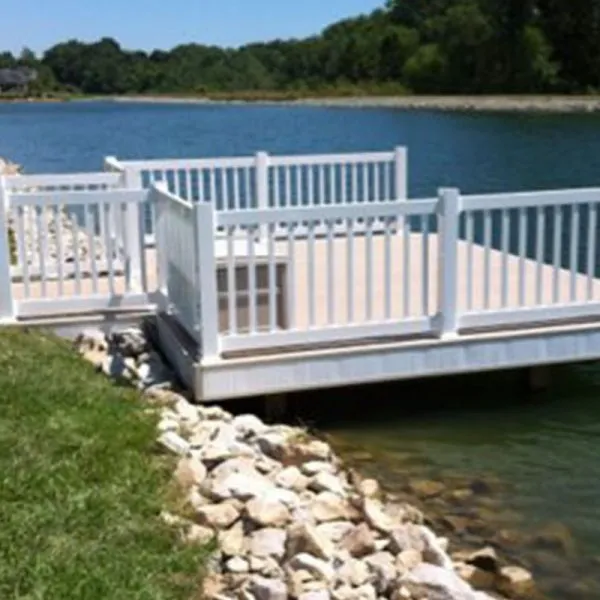
Wood costs less up front: $20 to $50 per foot installed, against $30 to $60 for vinyl in the national figures. Vinyl then needs very little care. Wood has to be sealed and repaired now and then, so over many years the gap in total cost narrows.
These price ranges are national figures published by HomeGuide for 2026. They are not our quotes. Los Angeles labor rates, material prices and the conditions on your lot move the real number up or down. Last checked October 2026.
| Wood | Vinyl | |
|---|---|---|
| Installed cost per foot | $20 to $50 | $30 to $60 |
| Upkeep | Seal or stain every few years | Wash it down |
| Weak point | Posts at ground level, termites, sprinkler rot | Strong sun chalks and fades it; an impact can crack it |
| Repairs | Board by board | Usually a full panel or rail |
| Fire | Burns | Melts and can burn |
| Look | Natural, any stain color | Even, limited colors |
Redwood, cedar or pressure-treated pine?
In Los Angeles the choice is mostly redwood or cedar for the boards. Both have heartwood that resists rot and termites without treatment, and both move less than pine as they dry in our heat. Between cedar or pressure-treated pine, pine is cheaper and the treatment protects it in the ground, so it is a sensible pick for posts. Redwood or cedar boards on treated posts is a common build here.
Which fence lasts longest in sun, heat and dry wind?
Aluminum and steel with a good coating, then vinyl. Los Angeles has no real freeze, so the wear here is different from cold states. Sun bleaches and dries wood until it cracks, heat softens low-grade vinyl, and Santa Ana gusts rack a fence back and forth at the posts. In wood, the fence lasts longest when the posts are deep, the concrete sheds water and the boards are kept off the soil and away from sprinklers.
What type of fence is best for my yard?
| You want | Good choices | Keep in mind |
|---|---|---|
| Privacy | 6-foot redwood, cedar or vinyl | A solid fence takes the full push of a Santa Ana wind |
| A large dog | 5 or 6 foot wood, vinyl or chain link | Seal the bottom edge |
| Small children | A solid fence and a gate that latches itself | Mount the latch high |
| A pool | Aluminum, steel or vinyl to the state pool rules | 60-inch height and gate hardware get inspected |
| Lowest cost | Chain link | Not allowed everywhere; slats add privacy |
| Low upkeep | Vinyl or aluminum | Higher first cost |
| A hillside or fire zone lot | Steel or aluminum near the house | Ask the fire department about current rules |
That table is a starting point for what is best for my yard. The lot, the city and the neighbors narrow it down.
Is aluminum fencing strong enough for a large dog?
For most large dogs, yes. The things to get right are height and the space between pickets. Dogs that jump need more height. Small dogs need closer pickets near the ground. A dog that throws its weight at the fence all day is better behind steel or a solid fence.
We have a large dog, want privacy and do not want to spend a fortune. What makes sense?
A basic 6-foot dog-ear board fence in a common grade of wood. It blocks the view, holds most large dogs and costs less than any other solid fence. To trim the bill further, put the solid fence only where neighbors or the street look in, and use chain link on the sides that are out of sight, if your city allows it.
My neighbor has wood and wants me to match it so we can split the cost. I want vinyl.
A single shared run can only be one material, so you two have to pick one for that stretch and put the cost split in writing. The rest of your yard is your own choice. If there is no agreement, most people build their own fence a little inside their line and pay for all of it.
Will the new fence look the same on my neighbor's side?
That depends on the style. Board-on-board, shadowbox and most vinyl panels are finished on both faces. A plain board or picket fence has a smooth face and a face with rails and posts. Settle with the neighbor which way it faces before we build, and ask your city if it has a rule on that.
We can only give a real price after seeing the fence line. The estimate is free. Call (310) 361-5119 or text us a photo of the yard.